I hold a BSc in Environmental Management and Sustainability from the University of Plymouth and an MSc in Science Communication from the University of the West of England.
My undergraduate studies gave me a broad understanding of environmental challenges, alongside a strong foundation in scientific and managerial processes. My Masters degree strengthened my understanding of the theories and models of science communication, including the public's understanding of science, the shift towards public engagement, and both formal and informal learning. The practical elements of the course allowed me to develop skills in radio production, filmmaking, in-person engagement, and other forms of outreach. Ultimately, it taught me how to ensure that the work we do to protect the planet and people reaches people outside of our little science and conservation bubble. We need everyone onboard to make a real difference in the world!
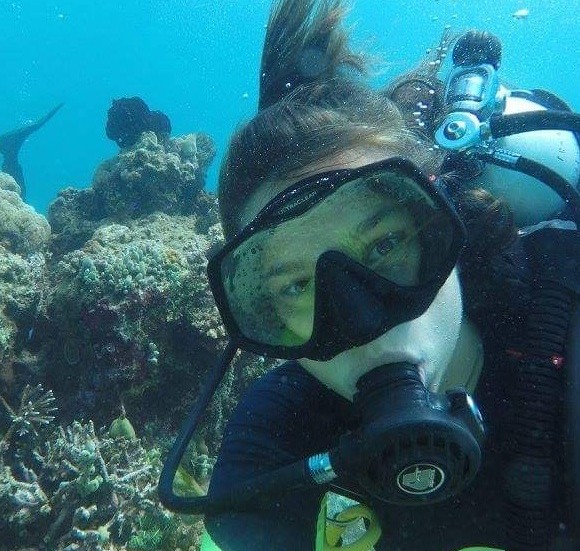
Applying this outside of academia, I have gained experience in conservation and scientific diving, contributed to ghost gear projects, and worked in waste management and reduction. I worked at Plymouth Marine Laboratory as Project Manager for the UN Ocean Decade Ocean Acidification Research for Sustainability programme, where I focused on making complex ocean acidification science accessible to policymakers, the public, and wider audiences. This included attending and speaking at international conferences to raise awareness of both the issue and the work being done to address it.

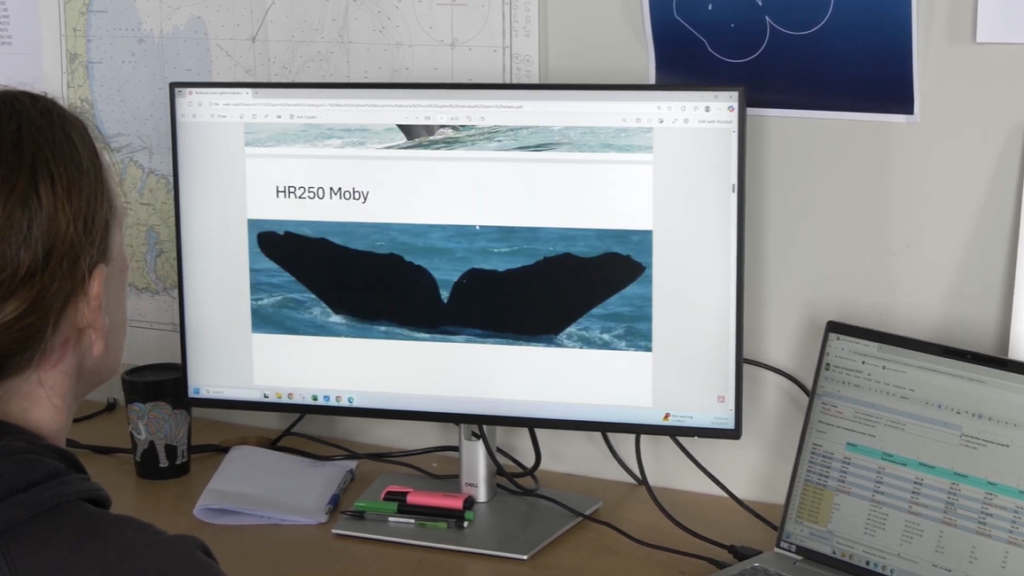
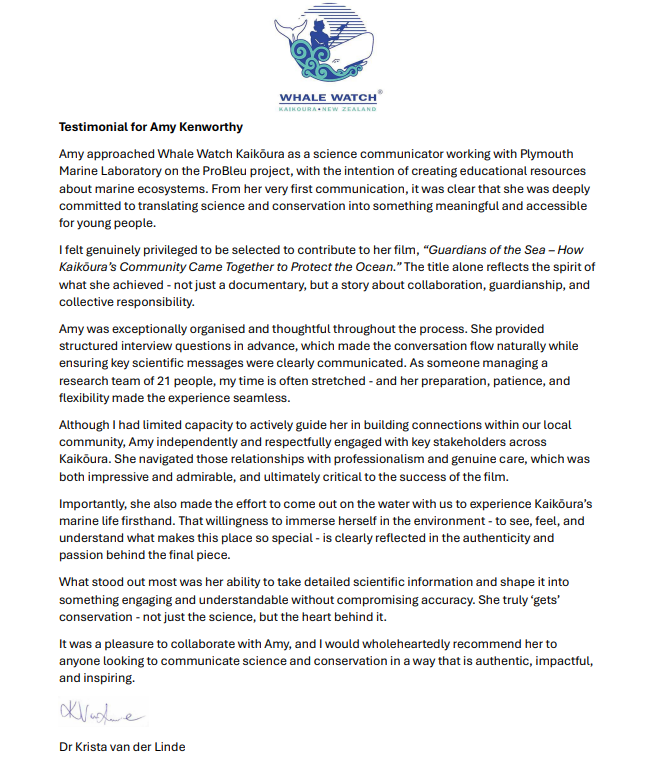
In 2024, I began working on the ProBleu project, developing a catalogue of ocean and water literacy resources for educators. As part of this, I created a series of “Science Stories”: short videos and teaching resources designed to make ocean topics more engaging and relatable for students. Meeting scientists, environmental managers and conservationists from around the world and creating films that show the work they do and the impact it has was a dream come true. It is what inspired me to continue to create films for scientists and conservationists to tell their story and share their work with the world.
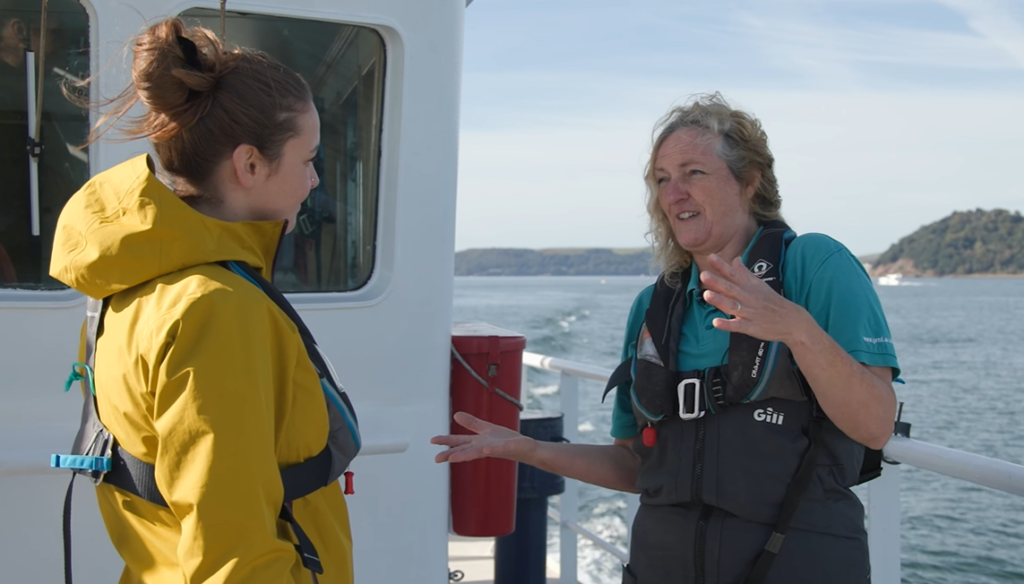
All of these experiences have shaped my understanding of the challenges and opportunities within environmental and science communication. At its core, science communication creates a bridge between the scientific community and the public, bringing evidence-based knowledge, important research, and conservation initiatives to people across society, from individuals to policymakers, to support better decision-making. Whether it’s communities protecting local ecosystems, individuals making more sustainable choices, funders and investors deciding what causes to support, or governments shaping climate and conservation policy, effective communication makes complex information accessible, relevant, and actionable.
Beyond this, thoughtful and engaging storytelling can foster collaboration across sectors. By creating shared understanding, it helps connect scientists, communities, practitioners, funders, and policymakers around common goals and solutions. That's why I work with people dedicated to protecting our planet, helping them share their work and tell stories that connect others to that work.
Ocean Literacy
A lot of my work has been focused on ocean literacy. Ocean literacy is the understanding of the ocean’s influence on us and our influence on the ocean. It extends beyond knowledge to encompass awareness, attitudes, behaviours, and the emotional connections that shape how we relate to the marine world.
As an evolving field of research and practice, I actively engage with it by connecting with the global community, including participation in the 2024 World Ocean Literacy Conference in Venice, the 2024 IOC-UNESCO Ocean Literacy Summer School in Malmö, and the 2025 European Marine Science Educators Association conference in Oostende.
My Master’s thesis, Promoting Ocean Literacy in UK Secondary STEM Education: Addressing Barriers and Leveraging Videos directly informed the creation of these Science Stories. Through a combination of literature review and interviews with secondary school teachers, I explored the challenges of bringing ocean topics into the classroom and what makes educational video content truly effective.

